Mom's Football Sidekick: A Designer’s Review
First Impressions: Capturing the Game Day Spirit
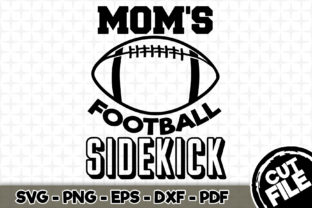
When evaluating Mom's Football Sidekick for potential use in a commercial or personal embroidery project, my first focus is always on the visual hierarchy and emotional resonance. As a designer who has stitched countless sports-themed items, I look for graphics that balance enthusiasm with wearability. This design immediately strikes a chord because it targets a specific, passionate niche: the football mom who wants to show support without wearing a generic jersey. The layout suggests a playful yet structured aesthetic that translates well from screen to fabric.
The mood of this graphic is energetic but approachable. It avoids being overly aggressive, making it suitable for a wide demographic ranging from youth league moms to high school boosters. From a design perspective, the shapes appear distinct enough to serve as an excellent foundation for an applique design or a combination of fill and satin stitches. When I open the included PNG or EPS files, I am looking for clean lines that won't get lost in translation when converted to stitches. The visual personality here feels custom and boutique-ready, rather than mass-produced, which is a critical selling point for Etsy sellers and small shop owners aiming for a handmade product feel.
Real-World Application: Stitching the Perfect Sweatshirt
To truly judge the viability of Mom's Football Sidekick, I mentally place it into a real-life production scenario. Let’s imagine preparing a custom crewneck sweatshirt for a fall craft fair or a personalized gift order. Sweatshirts are a staple for this demographic, but they present unique challenges due to fleece texture and stretch.
In this scenario, I would utilize the SVG or DXF file to visualize the placement before hooping. For a sweatshirt embroidery project, the design needs to be sized appropriately to avoid looking like a sticker. If the graphic includes bold lettering, I would ensure the satin stitch columns are wide enough to cover the fleece nap without sinking in. If there are intricate details, I might convert them to running stitch outlines or simplify them to prevent puckering on the soft fabric.
This design also shows strong promise for tote bag designs. Canvas tote bags are popular game-day accessories, and the flat weave of canvas provides a stable base for detailed machine embroidery design work. Here, Mom's Football Sidekick could be paired with a name or team color accent to create a high-value personalized gift. The versatility of having multiple file types means I can easily adapt the graphic for different substrates, ensuring the finished product looks intentional and professional whether it is on heavy canvas or soft cotton blends.
Navigating Fabric Textures and Hoop Limitations
While the graphic is versatile, experienced makers know that not every surface is forgiving. When using Mom's Football Sidekick, you must consider the interplay between stitch density and fabric texture. If you are working with textured fabrics like terry cloth or pique knit, fine details in the graphics may disappear. In these cases, I recommend testing the design on scrap fabric first. You may need to add a topping stabilizer to keep the stitches crisp and visible.
Hoop size is another practical constraint. Before committing to a project, confirm that the design dimensions fit your available hoops without requiring excessive re-hooping or splitting. If you are stitching on curved surfaces like caps, verify that the design’s aspect ratio works within the limited vertical space of a hat frame. Tiny lettering or thin connecting lines in the original graphics might need to be thickened or removed entirely to ensure stitching clarity on a cap. Always inspect small details in your embroidery software; what looks sharp on a monitor can become a thread nest on a curved brim.
Stretchy fabrics require extra caution. If applying this design to performance wear or thin jerseys, use a cut-away stabilizer to prevent distortion. Dark fabrics demand high contrast thread colors; test your palette beforehand to ensure the design pops against navy or black backgrounds. Remember that dense stitch areas on lightweight fabric can cause tunneling, so adjusting the underlay or reducing density is often necessary for a professional finish.
Elevating Product Value and Brand Consistency
For creative entrepreneurs and Etsy sellers, Mom's Football Sidekick represents more than just a cute image; it is a tool for building brand recognition. Using consistent, high-quality graphics across your product line establishes trust with buyers. When customers see a polished embroidered patch or a neatly stitched apron, they associate that quality with your entire shop. This design’s balanced composition allows it to anchor a collection of game-day merchandise, from baby embroidery onesies to holiday embroidery ornaments.
The inclusion of printable mockup assets via the PDF or PNG files is invaluable for digital product sellers. Before you even thread a needle, you can create realistic previews for your listings. However, nothing replaces the confidence gained from stitching a physical sample. A photo of the actual finished product on a model or flat lay significantly boosts buyer engagement compared to digital renders alone. It demonstrates that you understand how the design behaves in reality, reinforcing your expertise as an apparel decorator or handmade seller.
Furthermore, this graphic supports commercial embroidery ventures by offering broad appeal. It fits seamlessly into boutique branding strategies where uniqueness is key. By pairing Mom's Football Sidekick with custom typography or complementary design assets, you transform a standalone graphic into a signature product. This level of customization justifies higher price points and distinguishes your work from generic competitors.
Critical Notes for Makers and Sellers
Before adding Mom's Football Sidekick to your production queue, please heed these practical designer notes. First, while the product description confirms compatibility with paper crafting programs like Cricut Explore and Silhouette via SVG, DXF, and other vector formats, it does not explicitly list native machine embroidery formats like PES, DST, or JEF. As an embroiderer, you must verify if you have the software required to convert these graphics into a stitch file or if a pre-digitized embroidery file is available separately. Never assume a vector graphic is ready-to-stitch without conversion.
Always check licensing terms regarding commercial use. Confirm whether you can sell finished products featuring this design or if it is restricted to personal use. This is vital for protecting your craft business from legal issues. Additionally, review stitch density settings after digitizing or converting. Graphics intended for cutting machines often lack the necessary underlay and compensation settings required for fabric, leading to poor results if not adjusted specifically for embroidery.
Test the design in both black and white mockups to evaluate contrast and readability. Compare how it looks on light versus dark fabric backgrounds to plan your inventory effectively. Use proper stabilizer for every test run; skipping this step is the most common cause of wasted materials and frustration. Finally, inspect the design at 100% zoom in your software to identify any overlapping elements or gaps that could cause registration issues during stitching.
By approaching Mom's Football Sidekick with a critical, experienced eye, you ensure that every tote bag, sweatshirt, or patch you produce meets the highest standards of quality. Whether you are creating a personalized gift for a friend or stocking your shop for the upcoming season, thoughtful preparation turns a simple graphic into a cherished, professional-grade embroidered treasure.